1
Stay Calm
Try not to show panic or anger. Your child is watching your reaction closely.

Guide · ca. 10 Min.
Immediate steps for kids and teens — and calm, clear support for parents.
Outcome: Action plan, gathering evidence, paths for kids and parents, and helpful resources.
Who it's for: Those affected, parents, and caregivers · Last reviewed: 2026-07-13
This guide offers general educational guidance. It does not replace medical, psychological, legal or emergency assistance.
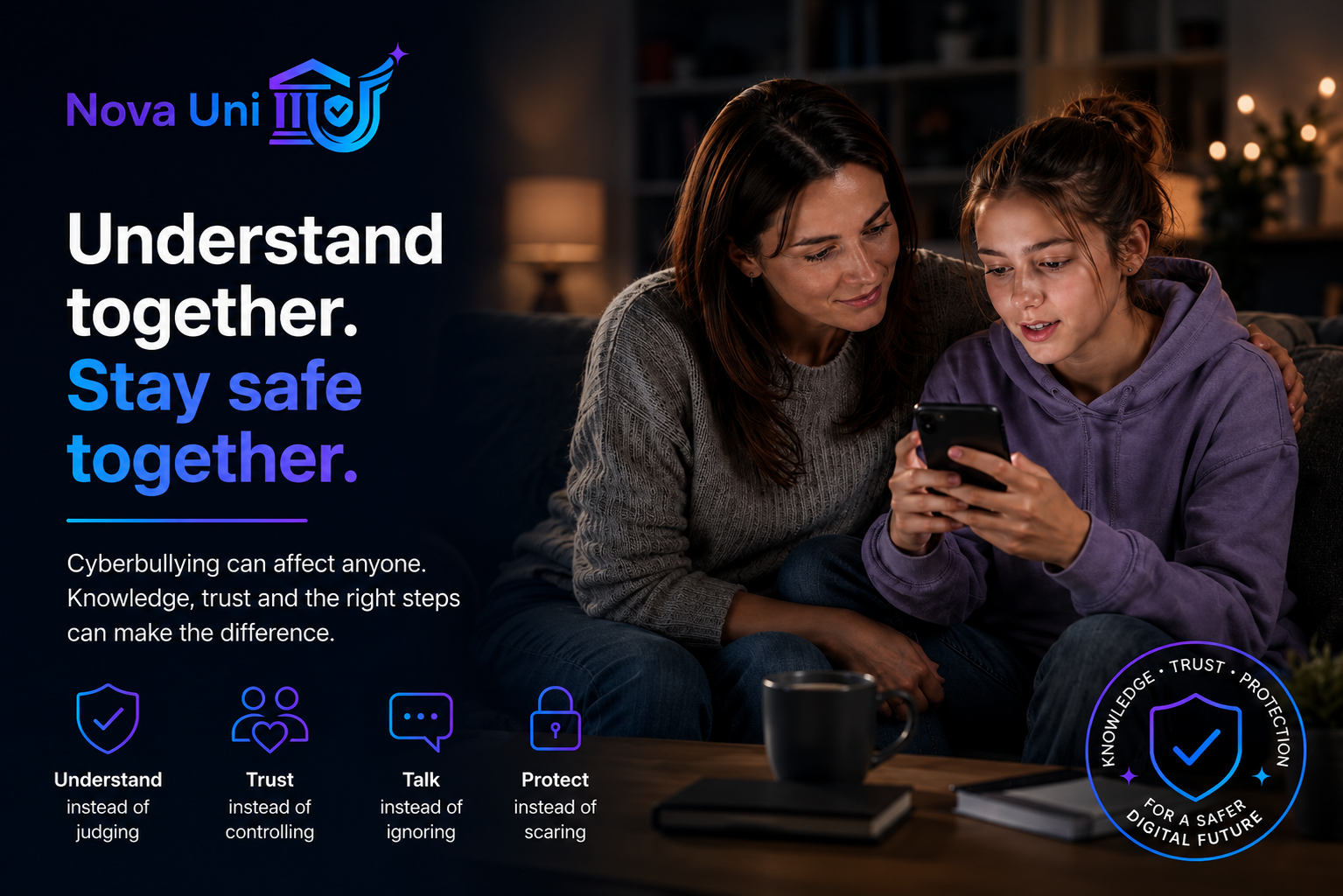 AI-generated content
Cyberbullying means that a person is repeatedly hurt, threatened, excluded, or embarrassed through digital channels.
This can include:
A single argument is not always cyberbullying. It becomes serious when it happens repeatedly, involves targeted humiliation, threats, blackmail, or a clear power imbalance.
The first five steps
Don't respond right away
Don't react in the heat of the moment. An angry reply can make things worse or spread the situation further.
Gather evidence
Save screenshots, usernames, links, dates, and times.
Block and report
Use the reporting and blocking features on the platform.
Talk to someone you trust
Speak with a parent, teacher, or another trusted adult.
Get help
If you receive threats, blackmail, sexual images, or feel very scared, seek professional help immediately.
WARNING
Your first reaction often determines whether your child will continue to share.
Try not to show panic or anger. Your child is watching your reaction closely.
Show that honesty is appreciated.
“Thank you for telling me.”
Taking away their device right away might make your child hide future problems.
Ask calm, open questions.
Gather evidence, block the person, report it, and involve the school or police if necessary.
Talk to your child again within 24–48 hours.
Good starting point
“You won’t get in trouble. I want to understand what happened and help you.”
You're not alone. You have the right to get help.
You don't have to react immediately. Taking a break often protects you better than a quick reply.
Take screenshots with the date, time, and names. Don't delete anything until you have proof.
Use the block and report features in the app. You have the right to protect yourself.
Tell someone you trust — a parent, teacher, or another adult.
If you're facing threats, blackmail, sexual images, or feeling very scared: get help right away.
You won't get in trouble for someone insulting, threatening, or pressuring you.
If you don't want to talk to your parents, you can also speak with a teacher, school counselor, helpline, or support service.
Save screenshots, usernames, links, dates, and times.
Save or document:
Important:
Find free and independent support services for children, teens, parents, and caregivers in your country.
Find helpHelp Lines
International helplines and official resources — filter by country.
Sextortion
Don't pay. Don't send more pictures. Get help — without feeling guilty.
Conversation Guides
How to start, what to ask, what to avoid — and how to respond to anger, silence, or shame.
Hacked Account
Recover access, log out devices, secure accounts, and limit damage.
Unknown Contact
Protect private information, recognize warning signs, and seek help in time.
Family Phone Agreement
A shared promise — not a punishment. Rules apply to everyone. Clarity, trust, and safe habits.