1
Don't pay
Paying often doesn't stop the blackmail. The offender may ask for more money or additional content afterwards.

GUIDE · ABOUT 8 MIN.
Don't pay. Don't send more pictures. Ask for help — without feeling guilty.
Outcome: A clear immediate plan for victims and parents, including evidence collection, reporting, and support options.
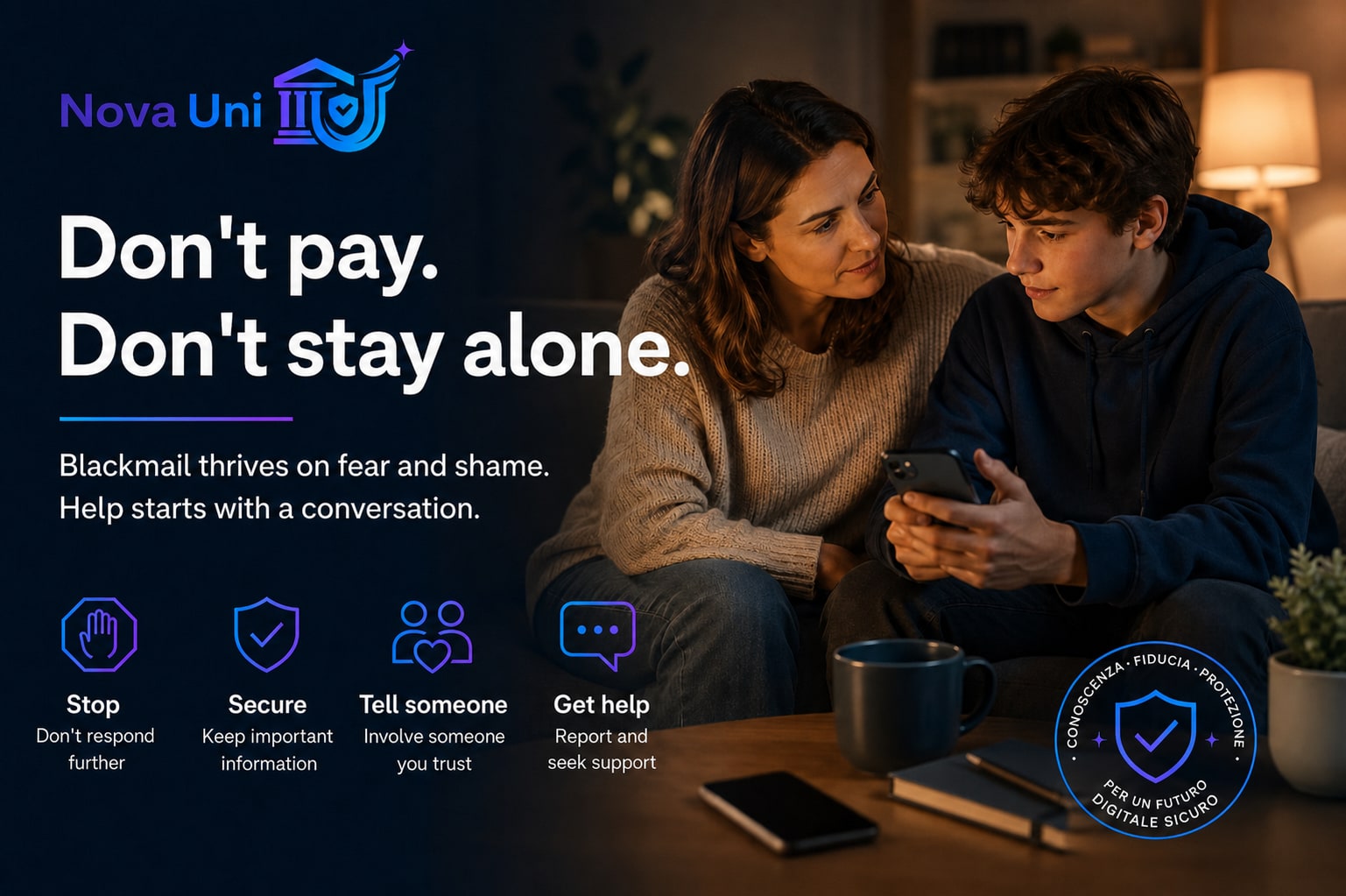 AI-generated content
Sextortion is blackmail using intimate or sexual images, videos, or information.
The perpetrators threaten to share content or send it to friends, family, or school if the person affected:
Sextortion can start through social media, messaging apps, gaming platforms, video chats, or fake accounts.
Even if a picture was sent willingly, the extortion is not the child's fault. The person who is blackmailing is the one committing the crime.
Paying often doesn't stop the blackmail. The offender may ask for more money or additional content afterwards.
Sending more content gives the offender more leverage.
Don't negotiate, provoke, or try to confront the offender yourself.
Use the platform's safety features. Block the account after securing important information.
Tell a trusted adult right away. You don't have to handle this alone.
Use official reporting channels, the police, or recognized child protection services.
A child's first reaction often determines whether they will share everything and accept further help.
Visible anger, panic, or shock can make the child hold back information.
Shows that asking for help is the right thing to do.
“Thank you for telling me. You’re not to blame. We’ll handle this together.”
Avoid accusations and immediate punishments.
First, determine how serious the danger is.
Save messages, usernames, links, timestamps, payment information, and platform reports. Don’t change devices or accounts unnecessarily before getting advice from professionals.
Report the extortion through official channels, recognized child protection services, and if necessary, the police.
Save or document:
Messages, links, and account details can be important. Sexualized images of minors should not be downloaded, copied, or shared unnecessarily. Use official reporting channels and follow their instructions.
Don't rush to delete your entire profile or message history. This information can be helpful for reporting and investigations.
Official services can help with reporting, securing evidence, and removing shared images.
Removal cannot be guaranteed. Still, use recognized services and platform reporting channels.
In the USA, the NCMEC service Take It Down can help limit the spread of explicit images taken before turning 18 — without needing to upload the image to NCMEC. Use only the official service and the CyberTipline.
It may take time to fully resolve the situation. The child should not be left alone during this time or blamed for the extortion.
Help Lines
International helplines and official resources — filter by country.
Unknown Contact
Protect private information, recognize warning signs, and seek help in time.
Cyberbullying
Immediate steps for kids and teens — and calm, clear support for parents.
Conversation Guides
How to start, what to ask, what to avoid — and how to respond to anger, silence, or shame.
Hacked Account
Recover access, log out devices, secure accounts, and limit damage.
Password and Account Security
Strong passphrases, secure recovery, two-factor protection — and a clear plan for emergencies.
This guide provides general educational information. It is not a substitute for medical, psychological, legal, or emergency assistance.